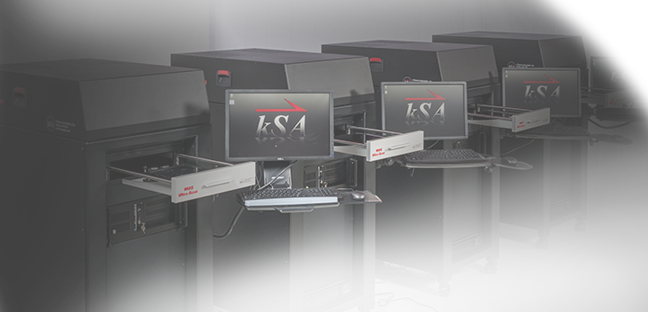

The new kSA ACE optics block is an example of the benefits of collaboration.
Why do we make customer collaboration a core value at k-Space? Simple. It leads to better products for everyone. Our new internal optics block for the kSA ACE is a great recent example.
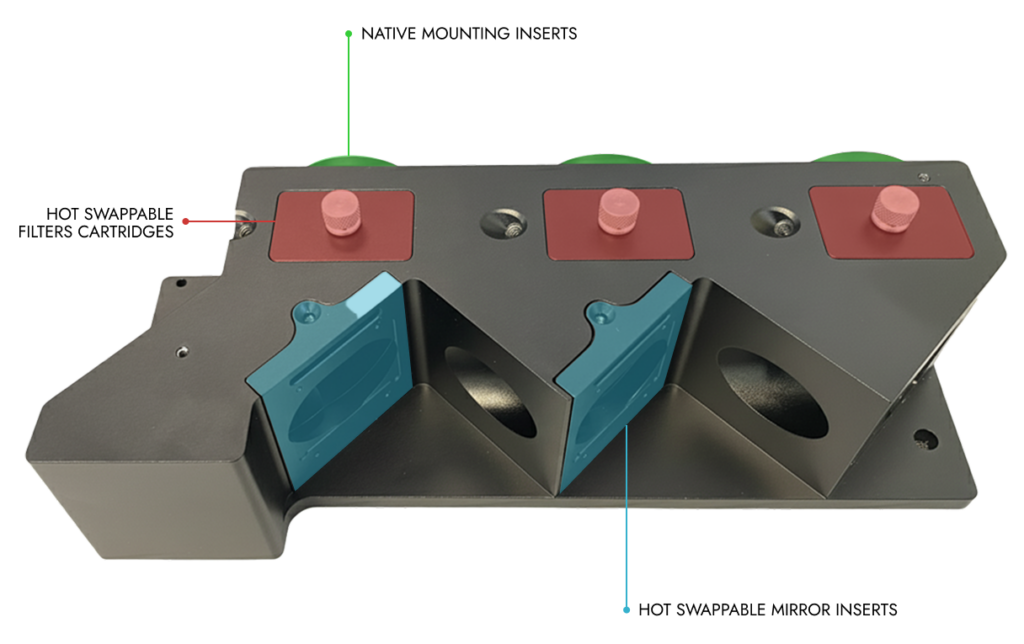
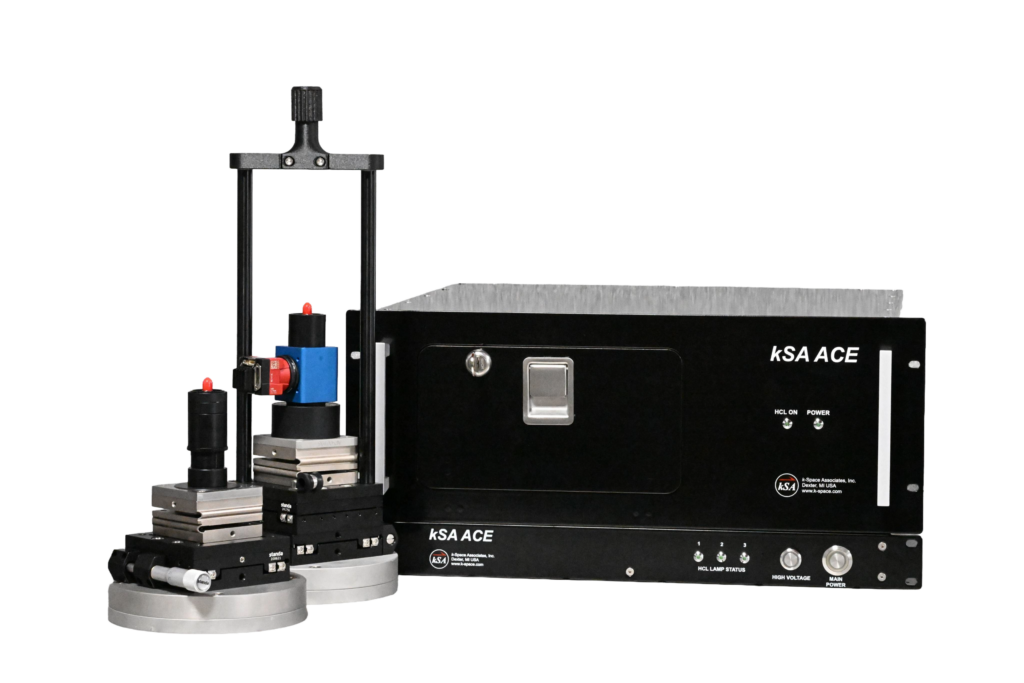
kSA ACE (Atomic Control for Epitaxy) measures the in situ flux rate of atomic species using the principle of atomic absorption spectroscopy. It’s a unique metrology tool found in deposition labs around the world. But one user contacted us, seeking a way to speed up the process of swapping out different elements. This would save them both a huge amount of time, and the hassle of waiting for a technician to make the change.

At k-Space, all our functions are in-house, on-site. That includes Engineering, Science, Software, Support, and Production. For this customer request, our engineering and production teams got to work and, with the help of our in-house 3D print lab, plus feedback from the customer, constructed an entirely new design.
The major changes are as follows:
- Hot swappable filter cartridges allow for the quick change of elements of interest. (Shown in red)
- Hot swappable mirror inserts assist in co-linearization of different elemental lines. (Shown in blue)
- Native mounting capabilities to use 1.5″ and 2″ HCL bulbs into the optics block. (Back side, shown in green)
Bottom line: It’s significantly easier to swap between elements. Now, instead of needing an hour or so of a qualified technician’s time, the user can swap out elements in about 10 minutes, on their own. This new design also allows for testing new elements by the customers with only limited capital investment of new filters. Win, win.
According to Rob Chockley, Operations Manager, “one of the competitive advantages of having all our teams onsite at k-Space is the daily collaboration between physicists, engineers, designers, and production crew. This leads to new and better semiconductor metrology tools. That, plus our unwavering commitment to customer collaboration, is why k-Space thin-film metrology solutions are in over 3,000 university labs, research institutes, and production facilities around the world.”
What’s your measurement challenge?